What Is Black Mass, and How Does Direct Recycling Differ?
Written by Team Infiniti
Most battery material that gets recycled today ends up as black mass. It's the default output of almost every recycling process running at scale, the raw material that comes out the other end once a battery has been through the system.
But recovering material and having something ready to go back into a battery are two different things. What happens to black mass after it's made, and how far it actually gets toward being usable again, is where that gap starts to show.
What is black mass?
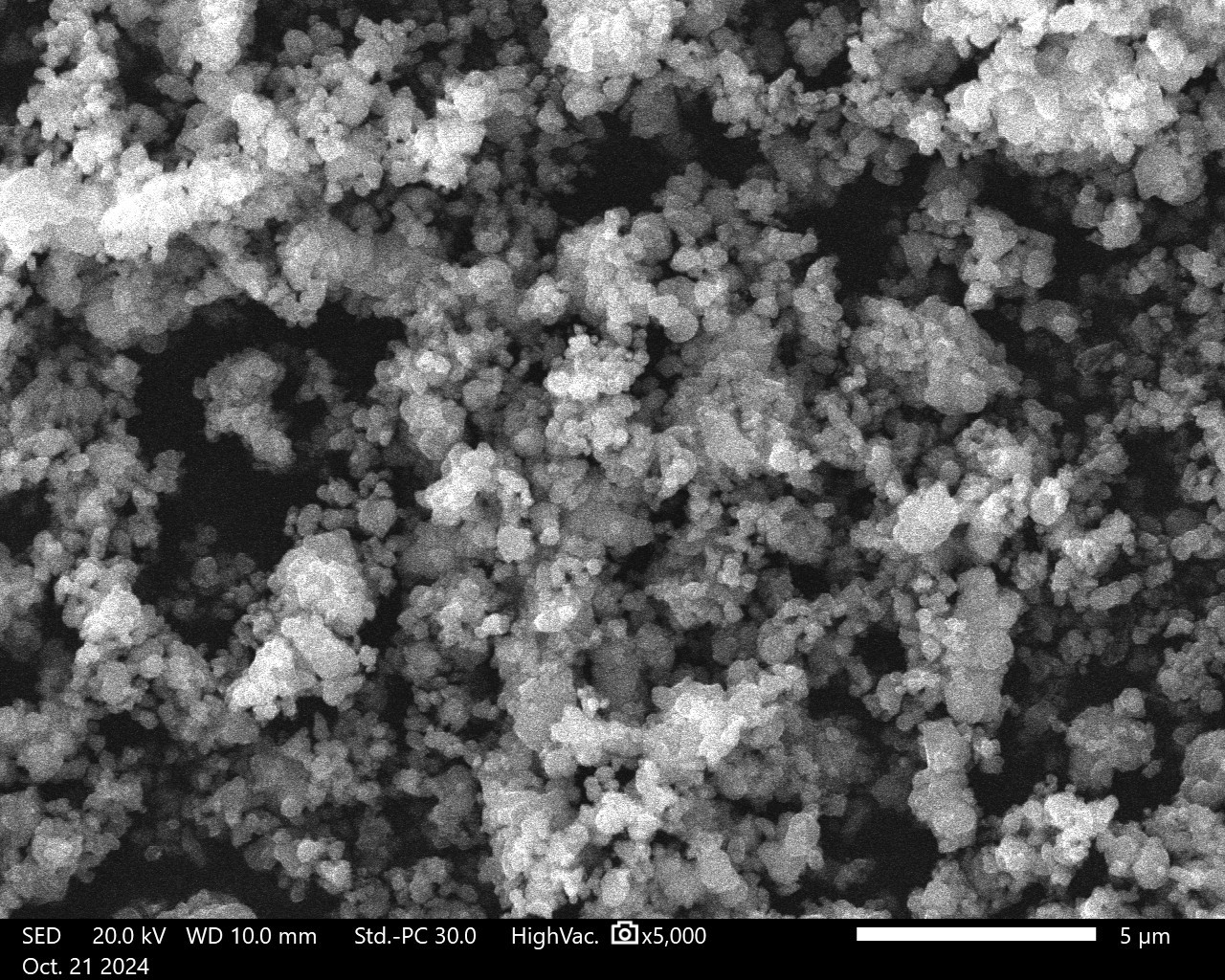
Black mass is the mixed powder left over after a battery is shredded and sorted, made up of both cathode and anode active material along with residual contaminants such as electrolyte, binder and fine metal fragments.
It's the result of a mechanical process. Batteries are discharged, shredded, and then sieved, separating the casing, current collector foils and larger fragments from the fine powder that remains. That powder is the black mass.

What's actually in that powder depends on the battery's chemistry. NMC cells (nickel, manganese, cobalt) and LFP cells (lithium iron phosphate) produce black mass with very different metal content. NMC still makes up the larger share of black mass produced worldwide, though LFP's share is projected to grow from 22% in 2024 to 31% by 2031 as LFP battery production scales up globally.
Whatever the chemistry, though, getting to that powder through shredding isn't a clean process. A 2022 review of industrial battery recycling operations found that recovery efficiency of black mass through the mechanical separation stage ranges from 75 to 90%, with the rest lost into the casing, foil and separator fractions along the way.
What happens to black mass next?
Black mass is a raw material, not a finished one. It still needs to be pulled apart chemically before any of it can go back into a battery.
That process, hydrometallurgical recycling, runs through several distinct stages, including pretreatment, leaching (dissolving the metals out of the powder using acid), purification to remove impurities, adjusting the resulting metal ratios back to what a battery chemistry actually needs, co-precipitation, and finally sintering to form new cathode material. Industry research describes this as a six-step process from raw black mass to a usable active material again.

Most of that refining does NOT happen in Europe. China currently holds around 89% of the world's black mass refining capacity. That means black mass produced elsewhere typically has to travel there to be turned into anything usable, and only comes back, if it comes back at all, after refining that happened somewhere else entirely.

How does direct recycling differ from that?
Through the conventional route, batteries are shredded into black mass, sent for chemical processing where individual metals are extracted, and then those are resynthesized into new active material from scratch.
Direct recycling skips most of that. Instead of breaking the electrode down to its base metals and rebuilding it, it recovers the active material itself, intact, and restores it to battery-grade condition directly.

That distinction brings us to the question, why destroy something with so much potential in the first place? The active material inside a used battery holds a great deal of value. The conventional route reduces it to base metals, then spends energy, time and infrastructure resynthesizing new active material from them. Direct recycling asks what happens if we recover the material as it is.
It’s worth noting, whoever controls those refining steps controls a lot more than just black mass.
Where we fit in
We've built our process around recovering active materials directly from manufacturing scrap, at our facility in Bethnal Green, London, without routing material through the shredding and refining network most recycling relies on today.
What's next
The steps that turn black mass into something usable also decide who holds power over battery supply chains, and why. That's where we're headed next.